College life is often portrayed as a time of exploration, growth, and academic challenge. But for many students, it also comes with financial stress, food insecurity, and unexpected emergencies.
Recognizing these challenges, the University of Iowa has developed a robust network of resources to support students’ basic needs—ensuring that no Hawkeye must choose between their education and their well-being.
2024-2025 Impact Report
This article is part of the Division of Student Life Impact Report. Click here to view all articles from this report.
Housed in the Division of Student Life, among the most impactful programs are the Food Pantry at Iowa, the Emergency Fund, and the Hawkeye Meal Share initiative. These services reflect the university’s commitment to student success, compassion, and access.
The scope of student food insecurity
According to a 2024 report by the U.S. Government Accountability Office (GAO), an estimated 23% of college students—approximately 3.8 million individuals— experienced food insecurity in 2020. A majority (2.2 million) reported very low food security, frequently skipping meals or eating less than they needed due to financial constraints.
Fewer than two in five food-insecure students met the eligibility criteria for SNAP (Supplemental Nutrition
Assistance Program), and among those who were potentially eligible, 59% did not receive SNAP benefits.
Campus-based resources like the Food Pantry at Iowa, Hawkeye Meal Share, and the Emergency Fund,
help bridge the gap for students who may not qualify for federal assistance.
The Food Pantry at Iowa: nourishing minds and bodies
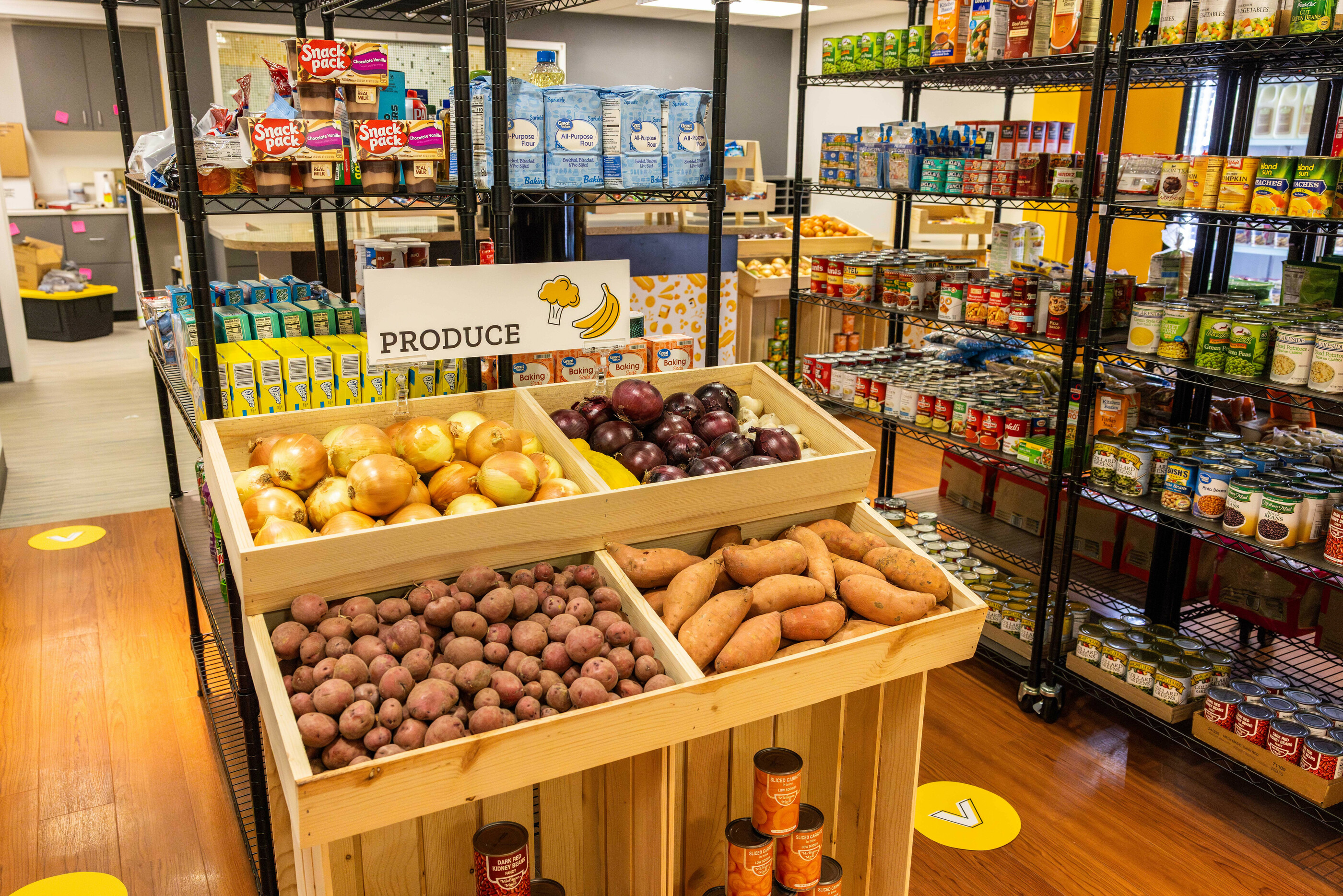
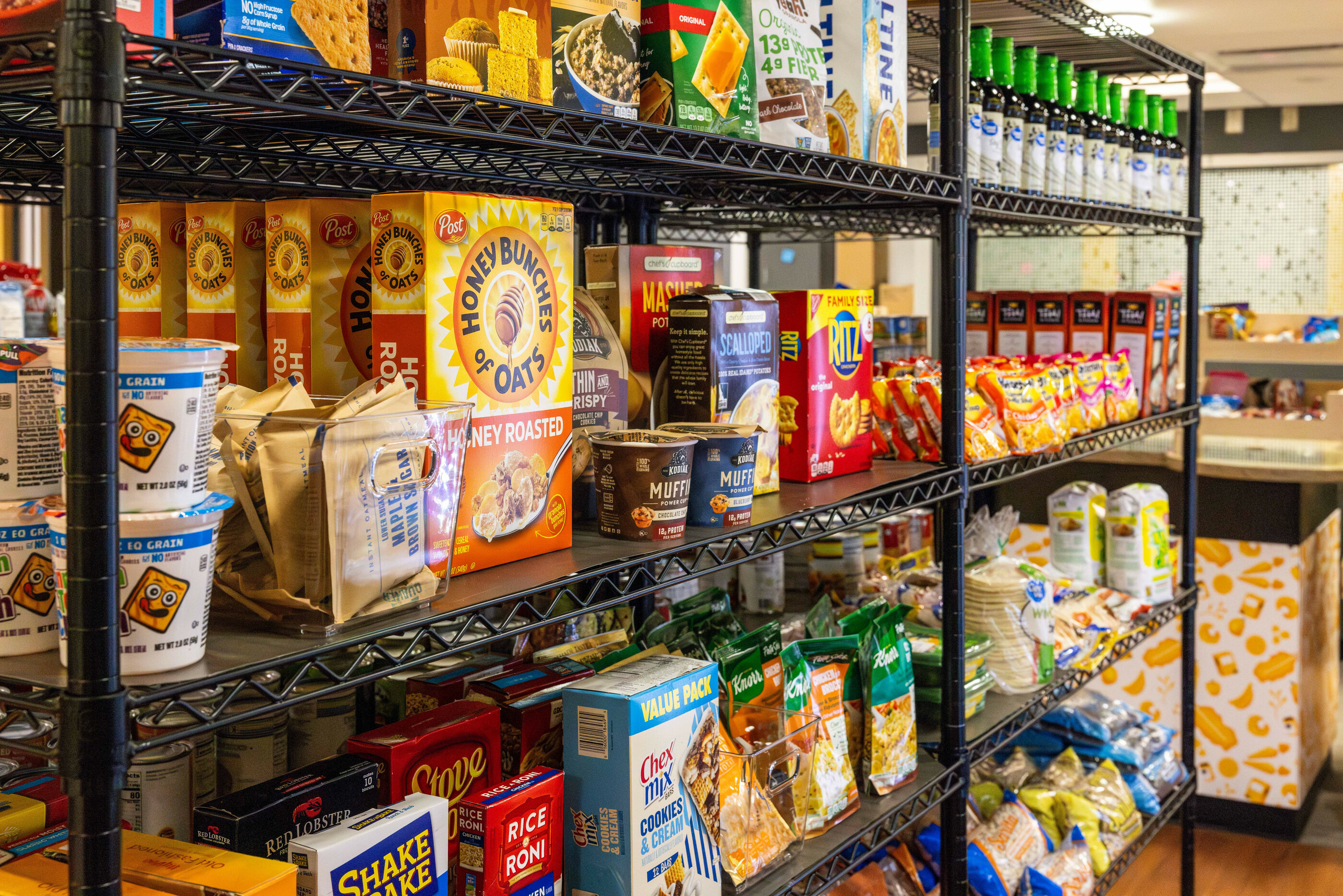
The Food Pantry at Iowa is a free service available to students, faculty, and staff. Food Pantry users can choose nutritious food and essential items including:
- Fresh produce
- Protein sources (meat, beans, tofu)
- Pasta, rice, and grains
- Canned fruits and vegetables
- Breakfast items and snacks
- Toiletries and hygiene products
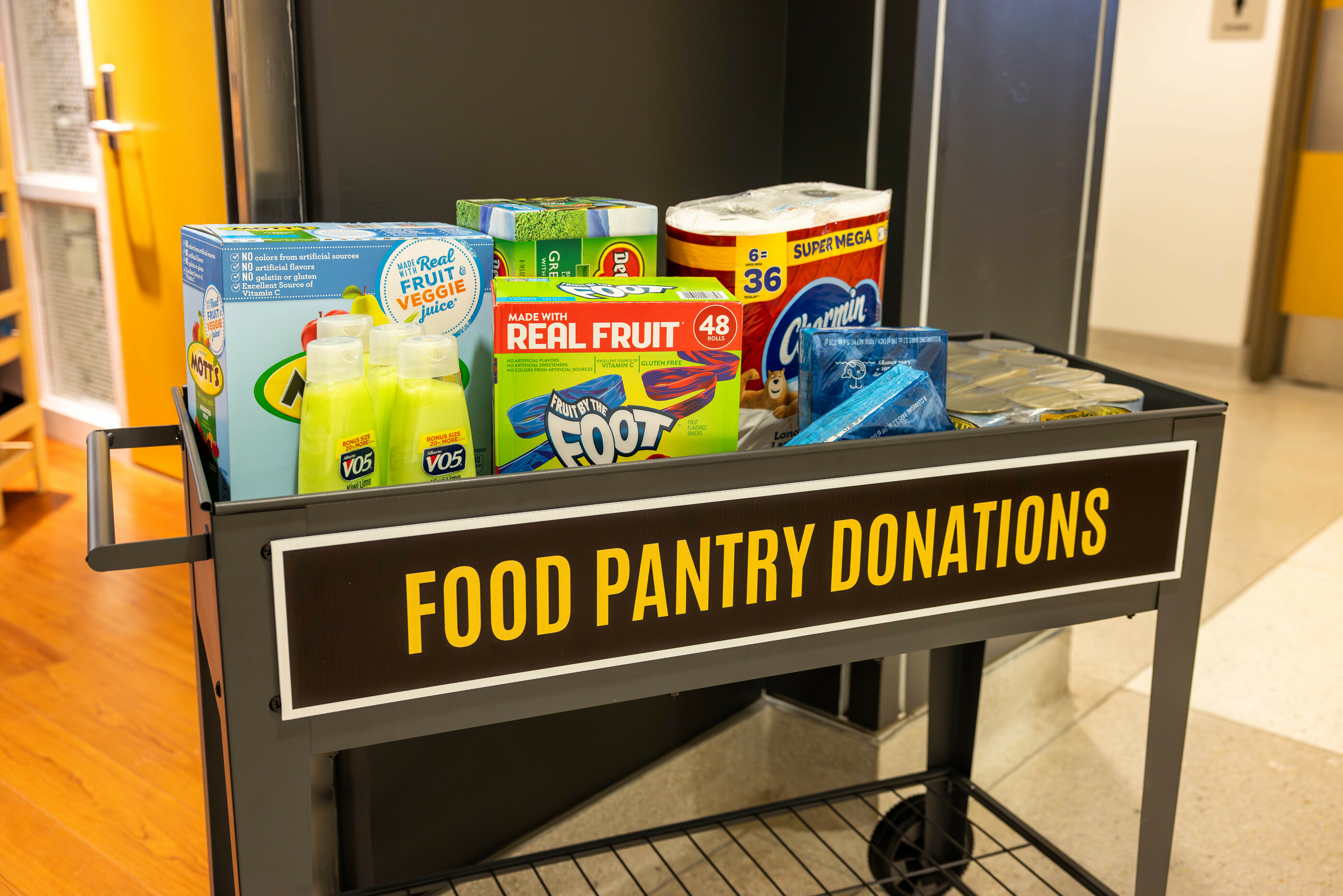
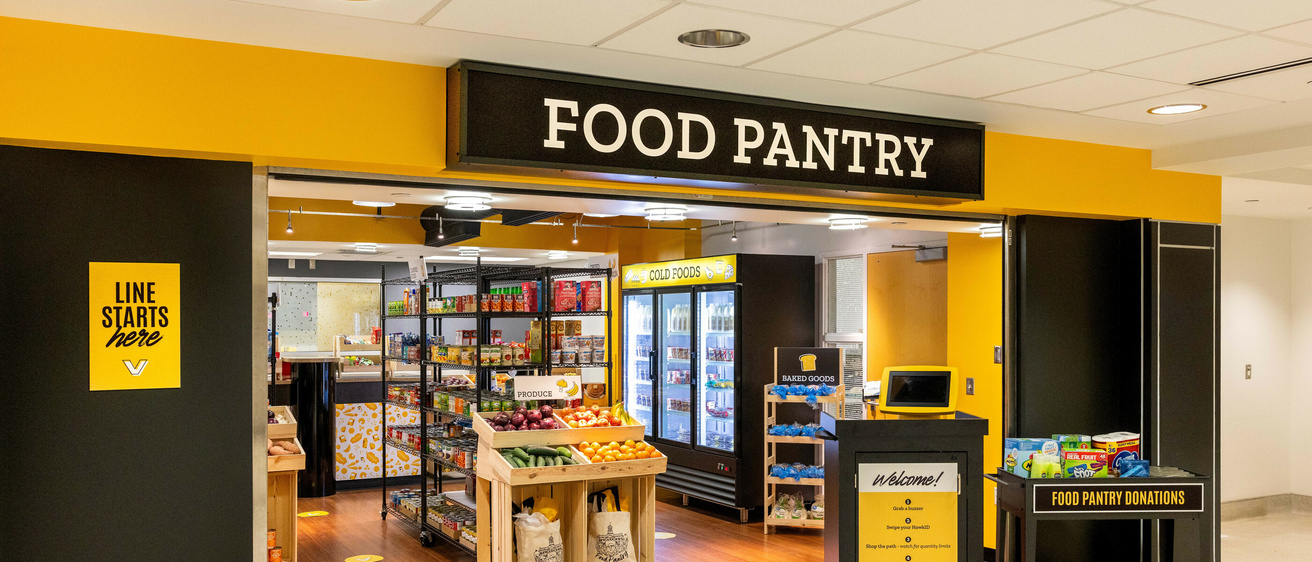
From the location in a high-traffic area of the IMU, to the neatly organized and stocked shelves, the goal is to encourage use of the Pantry, by making it welcoming and accessible. The Pantry is supported by donations and partnerships, including student organizations and local businesses. Volunteers stock shelves, greet clients, and maintain a respectful environment.
| Total Visits | Pounds Distributed |
|---|---|
| FY 2024: 10,179 FY 2025: 13,607 | FY 2024: 117,536 FY 2025: 164,305 |
Hawkeye Meal Share
The Hawkeye Meal Share enables students to donate unused guest meal swipes, creating a lifeline for Hawkeyes struggling with temporary food insecurity or crisis. Meal swipes are then distributed to eligible students as a shortterm solution to provide access to nutritious meals in University Housing and Dining market places.
Students can request up to 14 meal swipes per semester, pending availability. Due to high demand, requests are limited to two per semester, and students are encouraged to meet with a staff member for additional support. The application process is simple and confidential via an online form. For urgent needs, students can visit the Office of the Dean of Students in person.
The program is a collaborative partnership among: the Office of the Vice President for Student Life, University Housing and Dining, the Dean of Students, Student Government (UISG and GPSG), and the Food Pantry at Iowa.
Emergency fund: financial relief in times of crisis
Life is unpredictable, and students may face sudden financial hardships due to medical emergencies, housing instability, or family crises. The University of Iowa’s Emergency Fund provides a safety net for students who might otherwise be forced to pause or abandon their academic journey.
Students can apply for emergency funding through an online application. Staff work closely with applicants to assess their needs and connect them with appropriate resources, which may include:
- One-time financial grants
- Referrals to housing support
- Access to food and hygiene resources
- Mental health and wellness services
Data clearly indicates that these grants contribute to student achievement and success.
A coordinated network of support
The University of Iowa’s basic needs programs are not isolated efforts—they are part of a coordinated strategy to promote student well-being. Students can access information, schedule appointments, and find support through the Dean of Students website. In addition to the Food Pantry, Meal Share, and Emergency Funds, the university also offers:
- Student Care and Assistance: Case management and advocacy
- Mental Health Services: Counseling and crisis support
- Financial Literacy Programs: Budgeting and money management workshops
Together, these resources form a network that helps students thrive academically, socially, and personally.
Emergency grants show direct impact on retention
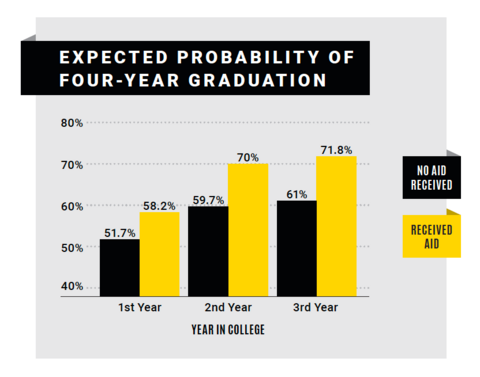
The University of Iowa invests nearly $1 million annually in targeted need-based financial assistance. Individually, these grants often provide $1,000 or less in funding.
Researchers Katharine M. Broton, Nicholas A. Bowman, and Soloman Fenton-Miller at the University of Iowa studied the impact of these need-based grant programs on students' academic success. Findings indicated that the grant recipients achieved higher GPAs, earned more credit hours, had better retention rates, and graduated at higher rates compared to otherwise similar peers.
The return on investment is clear. This research demonstrates that centrally organized and well targeted need-based grant programs significantly enhance students' academic attainment, contributing to the overall success of the University of Iowa.